28 August 2012

Olive tree friends

I recall that it was a Thursday morning.  Sunny, enticing, evocative and full of promise.  Certain adventure lay ahead; today had been long-anticipated.  I stood up from breakfast, kissed Ned Nederlander and  De Jongens goodbye, and walked out the door.  As I glided without a care through Amsterdam’s early morning light, I felt quite the elegant, mysterious, self-sufficient woman, and I wondered idly whether passers-by might have thought I bore an uncanny resemblance to Audrey Hepburn, with my Capri pants, ballet flats and jaunty scarf.  In reality I must have reminded them more of Mr Bean, as I wrestled comically with a pull-along suitcase that seemed intent on travelling in the opposite direction to me.  The bumbling likeness would have been strengthened by the maniacal grin on my face as I realised that for once I was not also wrestling two surly adolescents, intent on travelling in the opposite direction to me.

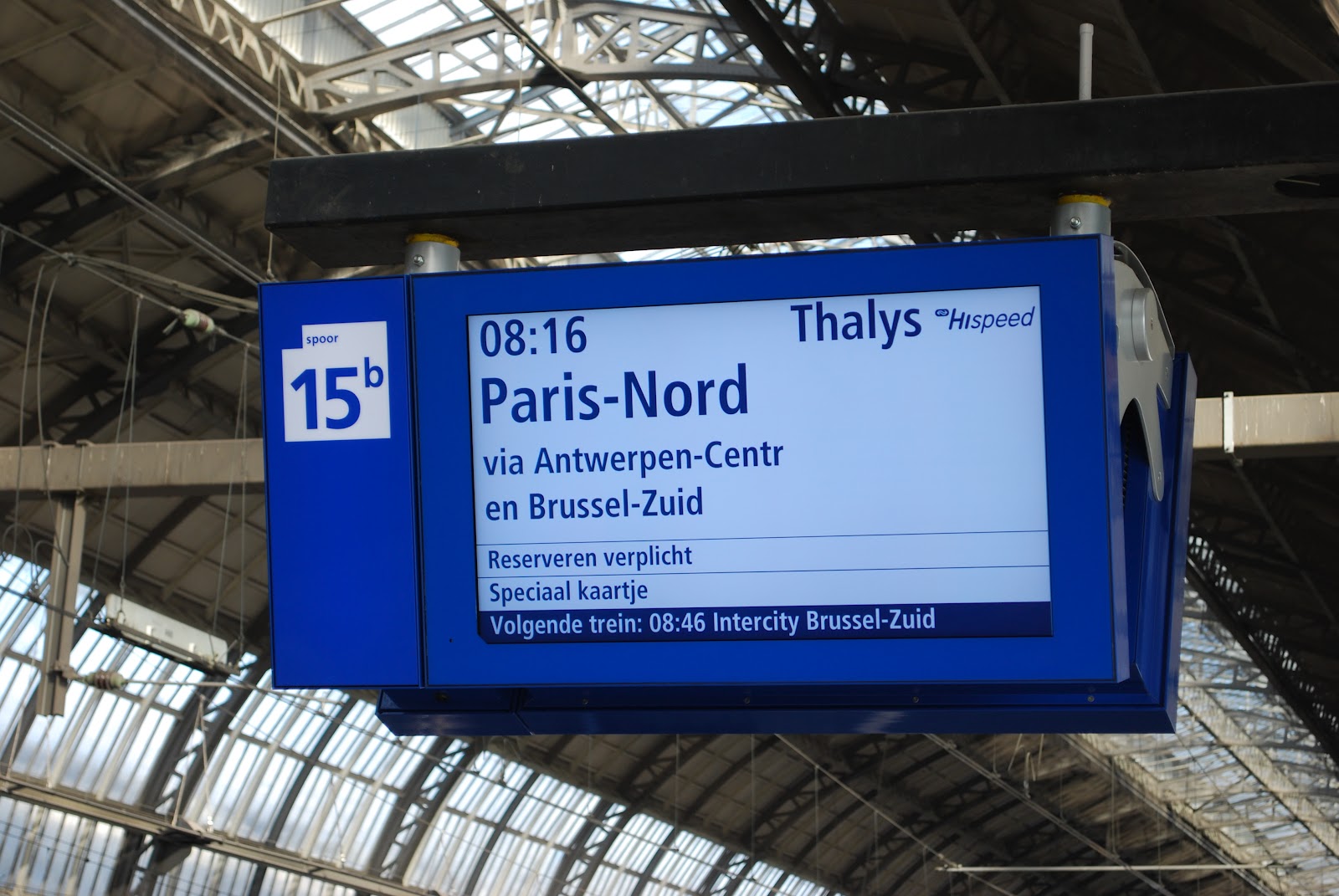
Twenty minutes later my dissenting suitcase and I boarded a train at Amsterdam Centraal, and I sank into my seat. My reading seat for the next few hours.  My thinking seat.  My listen-to-my-own music seat. My do-whatever-I-like seat. My selfish cow seat.  
The train slowly pulled out of the station and I was Audrey again. I cast one last pensive glance over my shoulder at the city in which I knew my family now trudged unwillingly to work and school.  I apologised silently to them for being so excited about leaving them. 

A little over four hours later, I was in the reception area of a quaint little hotel opposite the Jardin du Luxembourg in Paris.  I told myself I was a veritable picture of sophisticated European chic. There’s a very real chance, I suspected, that I reminded the rather charming French concierge of Grace Kelly.  He failed to vocalise that thought, but informed me with a knowing smile that “yur friend es waiting fer you in Room Ferty Wern on ze second fler”. I considered swooning, but instead I sashayed to the lift, all independence, style and deportment, under his watchful eye. Sadly, my recalcitrant suitcase didn’t quite make it before the doors closed, and independence, style and deportment met bumbling, uncoordinated fool in a most unpleasant collision. I believe I heard the concierge snort. Grace Kelly disappeared and Manuel from Fawlty Towers took her place.
My suitcase and I made it to Room Ferty Wern, although my composure and self-image lay in tatters on the floor of the poky lift.  The anticipation of the imminent rendezvous and my excitement about the planned events for the coming three days didn’t help matters, and I knocked a little too enthusiastically. The door opened and there she was – my fabulous friend Lisette, all the way from Australia. We shrieked, we hugged, we giggled.  Both Audrey and Grace, if they were ever there, left the room immediately.

Rather bizarrely, Lisette’s husband and children, with whom she’d been chatting when I pounded on the door, watched our reunion via Skype.   They probably thought they were watching a personalised version of Absolutely Fabulous. Clearly bemused, they hung up.  That left Lisette and I channelling Patsy and Eddie.  In no time at all we were celebrating our absolute fabulousness, lunchtime champagne in hand, in a cute brasserie somewhere near Boulevard Saint-Germaine.   We talked animatedly without drawing breath, and laughed with, but mostly at each other, with the easy comfort and ready familiarity of old friends.
There really is nothing like an “old friend” . . . those people with whom you have shared your school lunch breaks or perhaps your first university lecture.  They’ve celebrated your first “real” job with you, waved you off (or joined you) on your first overseas adventure, and welcomed you home again on your return. They’ve run, cycled, climbed, abseiled and paddled with you through life's challenges. They know at least one excruciatingly embarrassing story involving your past (and you know one about them, thereby assuring each other's silence on the matter). Old friends are the people who stood aside and gave you space while you fell in love, but who then stood close and reassuring when it turned out not to really be love after all. They are the ones who assessed when the “keeper” did come along, and then told inappropriate stories at your wedding, and will no doubt do the same at future celebrations.  
To earn an “old friend” badge, people need to have accompanied you on significant life transformations over protracted periods of time.  They may have journeyed with you for example from flagons to bottles, from pizza to degustation menus, from poky renovator’s delight to separate guest room with matching towels.  In Lisette and my case, we were marking a 15 year transition from dodgy backpacker hostel in La Paz to swish boutique hotel in the 5th arrondissement in Paris.

(Actually, the truth is Lisette has never been a dodgy backpacker hostel kind of girl, and after enduring a night or two of debilitating altitude sickness amidst shonky electrical wiring and poorly-laundered sheets in our shared La Paz accommodation, she moved to a posh hotel - with flowers - on the other side of town and occasionally summoned me to visit her during the subsequent weeks.  Consequently, Lisette’s transition to the 5th arrondissement was not quite as dramatic as mine, but technically we had shared the journey).
Of course the existence of “old friends” in no way undermines the great value of “new friends” or “old family”, who are essential for a whole range of different reasons.  It’s just that Lisette and I were the first of a bunch of “old friends” to arrive in Paris for a milestone birthday celebration, and they were on my mind.

We returned to the hotel after lunch and were reunited with another “old friend”.  While we’d been out, the hotel staff had somehow managed to fit a third bed into the room, despite our combined knowledge of physics and spatial geometry suggesting this was impossible.  And there we passed a couple of hours; three old friends, literally shoulder-to-shoulder and pillow-to-pillow, re-living past glories, re-telling stories we’d heard a hundred times before, readily sharing current secrets, laughing about nothing in particular and generally marvelling at how amazing it was that we were where we were.  Eventually, we wandered off into the Paris evening together; quite confident that to the outside world we were Juliette Binoche, times three.
Several more “old friends” came together over the next few days.  By the third day, we were a happy group of twelve, including Ned Nederlander and De Jongens, holed up together in a wonderful rambling house. At the centre of the house was an olive tree, planted incongruously in the living room beneath a soaring translucent roof.  I liked that – a universal symbol of peace, longevity, renewal, strength and victory, at the very place where a group of old friends had gathered. None of us mentioned dull foliage, gnarled trunks, dead wood, weathered crowns, or stony ground. Probably just as well.

And at the centre of our gathering of old friends, celebrating her own longevity (and peace, renewal, strength and various victories) was our great mutual friend Marguerite.  She planted herself at the head of the table, beneath a soaring silly hat that was a constant reminder of why we were there. Happy birthday, olive tree friend.

An abundance of cheeses, baguettes, olives, pates, croissants, pastries, coffee, chocolates, apricots and raspberries were shared around our table . Empty champagne bottles piled up and the noise levels beneath the soaring roof seemed to grow at much the same rate. Excursions were undertaken; the local market, the banks of the Seine, Notre Dame, the Arc de Triomphe and the Eiffel Tower were the obvious first choices. An unforgettable birthday dinner was shared. Dinner with old friends. 

All of us will long remember the amazing views, ambience, food, wine and company that evening on the river. No doubt, for years to come we will all roar with laughter whenever any of us recounts what Lisette did to that poor waiter - although the details must remain a secret among old friends . . .

Then all too soon it was time to say goodbye, as we have all done many times before, and no doubt will do again. It was time to return to our separate lives in disparate countries, to gather stories for next time we meet, and to start an appropriate detox program. It was time to think about the great value of the olive tree friends in our lives, both established and emerging, and be grateful for them all.  It was time to acknowledge Audrey Hepburn who once wisely noted (perhaps as she hurled a malfunctioning suitcase off a Parisian bridge) that “the best thing to hold onto in life is each other”.


30 July 2012

A close shave with a dozen wise men

Sometime last century, when Grote Jongen was three days old, I suffered a classic case of the aptly-named third day baby blues. Ned Nederlander had, somewhat unwisely in hindsight, left me at home alone with our precious newborn for about an hour. When he returned, he found us both sprawled on the bed - Grote Jongen sleeping peacefully in my arms; me weeping inconsolably.
Now, poor Ned had recently accompanied me through a gruelling 27 hour labour, during which he found himself on the receiving end of some rather cruel and threatening outbursts from me.  So he was understandably tentative as he sat on the edge of the bed to ascertain the cause of my anguish, lest it be revealed that this current problem, like the exhausting labour, was also his fault.
“One day . . .”, I began, gasping between heaving sobs. Ned looked distraught. “What is it??? One day, what?”, he coaxed, possibly recalling the various accusations and warnings I had levelled at him during the delivery of his heir.
“One day, these cheeks...”, I gulped.  My hand rested gently on our son’s perfect skin, and my chest heaved. “One day these magnificent soft cheeks will be ruined by stubble; he’ll be SHAVING, and what’s more, HE WON’T NEED ME ANYMORE!!!” I wailed pathetically, unable to articulate any further details of my distress.
Fast forward thirteen years.  Grote Jongen’s gorgeous, smooth soft cheeks remain for the time being, unblemished by stubble or any other hormonal affliction.  However, it is becoming clear that his constant need for his mother is definitely on the wane. ("I told you so", I'm tempted to hiss at Ned). Of course, this separation, this not-always-gentle pushing away is as it should be. The invisible elastic that binds a mother to her child must stretch, if it is to do its job.

The mix of pain and pride that comes with this realisation is discomfiting, and definitely requiring some adjustment on my part. After all, I have sat by this boy's side through two general anaesthetics, one ambulance ride, three trips to Emergency, two broken arms, 37 stitches, five dental fillings, and 641 bandaid removals (each one more traumatic than any bone fracture), all in some 4,745 days of life.  Surely, I need to at least remain on stand-by?

Furthermore, in addition to the mandatory provision of early lessons in reading, writing, colour identification, shoelace tying and toileting, I like to think I have also contributed to his ability to argue a point, cook pasta, get lost in a good book, stay calm in a crisis, choose the best nectarine, stand his ground, be discerning in his chocolate selection and other essential life skills. Can he really be preparing to take it from here on his own??? I swallow, disbelieving.
Ned and I decided we wanted to meaningfully acknowledge Grote Jongen’s upcoming entry to adolescence.  Becoming a teenager is surely one of life’s significant gateways, and we wanted to assure him that his parents were (despite appearances) coming around to the idea that he could indeed soon “take it from here”.  The sudden awareness that we had brought him to the other side of the world, reducing his access to trusted and familiar external male role models at a time of his life when they are most needed, loomed large before us.
Having long been fans of the it-takes-a-village approach to communal child-raising, we decided to deal with our latest parenting challenge by pounding the village drum.  We e-drummed a request to a number of significant men in our lives; good and wise men of all ages whom we hoped Grote Jongen might turn to as he inevitably (at least for a few years) grows away from his own parents.  Our brief was vague – essentially it was to send him something for his thirteenth birthday that might help him on his journey through the wilds of adolescence and beyond. A quote, a photo, a letter, a talisman . . . free choice. Ideally, we hoped the contributions might also help forge a lasting bond between Grote Jongen and the said Wise Men, despite the inter-continental drift we had imposed.
They did not disappoint. On the day of Grote Jongen’s thirteenth birthday, we were able to present him with a box of mysterious envelopes and packages; the consolidated wisdom of men who our whole family is incredibly fortunate to have in our lives. Ned and I were not granted access to the words contained in the offerings – that will remain between the Wise Men and Grote Jongen, which is a shame really, as I’m quite sure there’s a book in it.  That secrecy is part of the “let him go, he’s learning to live on his own” training to be endured by us as parents. It’s both beautiful and dreadful, excruciating and exhilarating to experience. 
Yet, even without knowing the details of the dispatched wisdom, we have watched in wonder throughout the last week as our fledgling sat and pored through his box of treasures. He smiled, his brow furrowed, he laughed, his lips twitched, he sighed, and at times he looked quite overcome. He deigned to show us various books he’d received, ranging from “Oh the Places You’ll Go” by Dr Seuss to “Nineteen Eighty Four” by George Orwell. He looked positively smug as he showed us a stuffed Gruffalo that one of my favourite Wise Men had dispatched, and then left us completely in the dark as to its significance. That particular Wise Man has even written directly to me to blatantly and insensitively taunt me about my innate control freak tendencies and to speculate on how I must be coping with my son’ secrets. Not at all well, although I'll never admit that...
Ned and I are overwhelmed by the generous response, and so grateful that we overcame our initial hesitation to request it. I don’t think I’m imagining things when I say that I can detect a very subtle change in Grote Jongen since the Wise Men answered our drum.  He’s more mellow, less angry. Perhaps even a little meditative. There's a new tolerance of parental presence in his vicinity, I hopefully think.  I swear I can detect a slightly more confident bearing. He seems taller somehow. There might even be the slightest swagger developing...
Why might that be? I can only conclude that just because we don’t require our junior warriors to prove their emerging maturity by enduring weeks of self-sufficiency in the wilderness (perhaps without social networking tools), or by slaughtering a wild beast (albeit without a fully-charged game controller), or climbing to the top of a mountain (carrying fifty kilograms of mobile phones) doesn’t mean that they don’t need the acknowledgement of the wise men in their village.  They do; they need to feel part of a safe and varied circle of men. And their mothers need to have confidence that the circle is wise and good and compassionate and reliable and trustworthy.
The newborn that slept so peacefully on that London bed in 1999 while his weeping mother drowned in hormones, knows absolutely now that he is part of a safe circle of men. His mother knows it too, and is feeling much better about what she has to do next.
But she still doesn’t want him to shave.

19 July 2012

Still wet behind the ears

Avid readers of The Low Down may recall that within days of moving into our Amsterdam abode, we experienced a basement flood of near-biblical proportions. A burst pipe in our absent neighbour’s house turned our guest room, study  and storeroom into something resembling the lost city of Atlantis.

Five months later, with the gentle lapping of water against our precious belongings a distant memory, we were preparing to embark on a summer break in Tuscany with our regular family holiday companions, the Broken Hill-billies.  With thirty minutes remaining until we needed to depart for the airport, Ned Nederlander discovered what could only be described as “a big puddle” in the basement and a disturbing drip coming from the boiler.  Survival instincts kicked in; flood or flight? An almost unbearable decision.
Readers should note that European domestic boilers are possibly one of the most intimidating of all appliances, combining complex electrical engineering principles with the temperament of a tired toddler and the predictability of a drunken unicyclist.  They are simply not to be meddled with. Ned and I could no sooner have turned the thing off than we could have shut down a nuclear reactor.  

Now, the Hill-billies are great friends of several decades standing.  They have weathered many previous melt-downs with us, along with occasional instances of marital fission.  As Ned and I struggled to retain our composure, the Hill-billies sensitively picked up on the imminent fallout, and before you could say “chain reaction”, they had grabbed De Jongens, their passports and bags, and headed to the airport, gaily farewelling us with promises of postcards and a souvenir jar of olives.  As they disappeared out of sight, Ned and I briefly entertained the idea of putting a bucket under the boiler before running away together for a romantic week in Mauritius.
Instead we activated a dizzyingly complicated barrage of instructional text messages, phone calls, emails and heartfelt pleas to friends, plumbers, neighbours and landlords.  That took us just enough time to ensure that the Hill-billies shepherded De Jongens through check-in, baggage drop, passport control and hundreds of duty-free shops at Schiphol without the need for Ned or I to be involved in any way. We figured that was almost as good as a week in Mauritius, so we decided to join them on our planned Italian family adventure after all.

The next ten days were spent trying not to think about what might or might not be happening back home in our basement. Aquatic reminders were everywhere.
For example, at our farm-house hideaway in the hills above Lucca, De Jongens made the most of the swimming pool in the olive grove.  They were unaware of the mental anguish they were causing me with their constant refrain of “I wish we had a swimming pool at our house in Amsterdam”.

In Florence, while other tourists marvelled at Renaissance masterpieces featuring countless images of cherubic archangels, I saw only ark angels. 

The Ponte Vecchio in Florence


Venice
A charming Venetian gondolier emphasised the convenience of being able to moor a boat at one’s front door, and sometimes inside one’s front door. My blood pressure soared. A fellow ferry passenger on the Grand Canal regaled us with stories of flooded houses and the associated need to build new upper storeys as previously-dry basements succumbed to the murky lagoon waters.


Each time someone farewelled us with an “arrivederci”, I heard “a river Dutchie”.
Venice
An enormous information board in front of the Venice campanile outlined innovative new flood control measures for the famous piazza.  The board included photos of grave-looking engineers standing in ankle-deep water in front of St Mark’s Basilica, and I’m sure I looked pretty grave myself as I struggled to rid my mind of my own domestic flood imagery.

Kleine Jongen at the helm
Terror on the Cinque Terre
On top of all that, Ned and I were exposed to a steady stream of whinging from De Jongens, which at times felt like a raging torrent. The cause of their complaints varied, but essentially they were afraid that they would drown in culture, the poor things.  They were bored with being pumped full of useless explanations about the incredibly boring and irrelevant Renaissance, they were sick of swimming against the endless tide of tourists, they were being unfairly and unreasonably flooded with religious history, their holiday was awash with art they neither liked nor cared about.
Cinque Terre

Ned and I simply fed them another gelato and ignored their wishy-washy complaints.
Despite the mental anguish caused by such constant watery images, Italy proved to be an extremely pleasant place to contemplate our aquatic future.  In contrast to the lowlands, it was hot and dry – really hot and really dry.  The food was fabulous. The wine was copious.  The architecture was astonishing.  The sense of history was at times overwhelming.

Sadly, our sense of aquatic dread as we returned home was huge.

Lucca
 It was heightened by a meeting with our elderly neighbour - yes, she of the burst pipe fame - about 100 metres from home.  “Oh hello dear”, she smiled, “I hope you’ve had a lovely holiday.  I have a few things to tell you”.  We were in the middle of a pedestrian crossing on a busy street, moving purposefully in opposite directions, calling politely to each other over our shoulders. But I froze when she said “My basement has filled with water again, but I’ll have to tell you about it later. Cheerio”. That would be the basement that shares a common internal wall with our own basement.


Venice
Ned and I momentarily contemplated returning to the airport and taking the first flight to Mauritius. But, with the Hill-billies by now on a flight back to Australia, we would have had to take De Jongens with us, so we dismissed that as an option and bravely continued our homeward journey. You can’t imagine how gingerly we entered our house, how expectantly we sniffed the air for evidence of ark angels, how reluctantly we descended the stairs to our basement to find... a floor as dry as a Tuscan road. Not a drop to be seen.
We soon realised that the desperate series of phone calls, emails and text messages sent before we left for the airport had generated the required chain reaction.  A plumber had managed to get into our house to assess the situation; he had expertly turned off the intimidating boiler; he had recognised that the said boiler needed a major overhaul; he would be back to conduct the necessary repairs and reconnect the hot water . . . in three days from now.

I have decided not to fret about our temporary lack of hot water, nor to make waves by asking why it was not fixed during our ten day absence.  Instead, in the hours I saved today by not having a shower and not doing the required six loads of holiday washing, and while looking forlornly out the window at Amsterdam's wet and chilly attempt at summer, I embarked on some detailed research into the possibility of squeezing in one more holiday before school resumes.

So I might just get to Mauritius after all.

17 May 2012

Life imitating art

"An allegory", he tells me nonchalantly.

George Orwell’s 1945 classic Animal Farm, which Grote Jongen is reading albeit under extreme duress, is apparently "an allegory for the Russian Revolution".

"Really?" I ask, desperately and unsuccessfully trying to remember my relevant high school English class. "Not a lesson in animal husbandry then?"

This leads to eye rolling, tongue clicking and deep sighing from Grote Jongen, and stifled giggles from Ned Nederlander, who for professional reasons is quite fond of an agricultural joke.

"What exactly is an allegory?" I inquire. (I'm pretty sure I know the answer, or could at least bluff my way through a sentence using the word, but I'd just like to check).

Apparently my budding literary genius is engrossed in his homework - a clear case of studiousness of convenience - and my question goes unanswered.

My own recent reading material encourages me to (at least attempt to) demonstrate genuine interest in subjects raised by adolecent boys. I am far more confident discussing English literature and world history with him than I am with our more usual topics of social networking, killing techniques used in Call of Duty, or the cruel inadequacy of his weekly allowance. So I persevere. "What exactly happened in the Russian Revolution?" I coax, ever hopeful that I might elicit more than a two grunt reply. Even as the question lands with a thud between us, I am aware that when I was twelve I probably had never even heard of Russia, much less her Revolution.

"It's a revolution that they had in Russia". Delivered deadpan, without a trace of irony or as much as a sly smirk. And so he unknowingly sows the first seeds of doubt about the value of the international education we are providing for him.

With the discussion obviously closed, I leave the room and surreptitiously thumb through my dictionary (just to double check, you understand). I find "allegory", nestled between "allege" and "alleluia", which seems apt somehow, since I had "asserted without proof" that I knew what it meant, and I had mouthed a "song of praise" on discovering that I had been close enough to knowing its meaning after all.

I then return to my computer and, checking that Grote Jongen can't see my screen, type  "Animal Farm allegory" into my preferred search engine.

Utilising research skills garnered during the course of two university degrees and a twenty year career advising clients on things I had little real knowledge of, I spent a good five minutes bringing myself up to speed on the underlying message of George Orwell's classic. At this point, I should really apologise to Mr Lloyd for not paying more attention in my English class circa 1978, because it seems that Animal Farm is actually quite a fascinating read, possibly wasted on surly adolescents.

In fact, my extensive research, combined with some frightening recent personal experience, has revealed that Animal Farm is in fact an allegory for the life of certain adolescent boys. Consider the following key themes of the book, and the alleged parallels with Grote Jongen's terribly unfortunate life on The Low Down Farm:

The use of rules and traditions to maintain order on the farm.

Grote Jongen's parents (a clear parallel with Orwell's pigs) impose a highly unreasonable set of rules and family traditions, including requiring him to be in bed by 9:00pm on a school night, eating occasional dinners together as a family and conversing pleasantly with fellow diners throughout those meals.

Tyranny as a management style, with associated manipulation through oppression

Apparently parental payment for a mere 100 texts a month is evidence of a cruel and oppressive regime. Compare this with a close friend of Grote Jongen, who goes by the name of "Everyone", and who never suffers the indignity of parental oppression. Everyone's parents happily pay for unlimited texts, phone calls and data downloads, and furthermore Everyone has a Blackberry or an iPhone. Everyone is also allowed to go to bed whenever he wants, and his parents give him money whenever he asks for it.

Leadership and corruption

Forcing adolescents to participate in family outings when they would obviously prefer to stay home on The Low Down Farm and interact with friends through social networking, or watch football matches on television, is clear evidence of cruel corruption among the leadership. Using the privileged position of parent as a basis for imposing boundaries and conditions is apparently an unacceptable abuse of power. Orwell had a similar message for his readers.

Foolishness and folly

The less said the better, although I must make passing mention of the idea that refusing to complete school assignments on the grounds that they are "stupid and boring", as someone on this farm has done recently, sounds suspiciously like something that Mollie the sheep might have come up with in Animal Farm.

The use of violence or the threat of violence as a tool for political oppression

This is used to great effect by Grote Jongen against Kleine Jongen.

Pride in banding together to overthrow an oppressive leader

Despite the example given above, De Jongens regularly demonstrate great camaraderie in the face of their oppressive leaders, employing a unified front of frightening efficiency and effectiveness that Orwell's sheep could only have dreamed of. For example, "No Dad, you definitely said we could stay up until 11:30pm tonight to watch the game on TV. We both heard you".

Lies and deceit

Orwell's pigs convince the other animals that their current situation is better than they think. The pigs give the other animals hope for the future by assuring them that all their dreams will come true. In an uncanny parallel, Grote Jongen's parents refuse to accept his claims of poverty and hardship, pointing out that he is very fortunate to live where he does, on the farm that he lives on. They secretly hope that repetition of this mantra will lead to eventual acceptance of it.

Gaining power by controlling the intellectually inferior

In Animal Farm, Orwell's sheep are portrayed as intellectually inferior to the other animals, and the pigs take advantage of that ignorance to manipulate them. On The Low Down farm however, there is an ongoing debate about which characters are the most intellectually inferior; Grote Jongen generally believes that honour goes to his parents who apparently "don't know anything, but think they know everything". Strangely, the more the leadership struggles against the rebellion, both in Animal Farm and on The Low Down Farm, the more their self-doubt grows and the closer they come to believing that they are indeed intellectually inferior to the masses they are trying to manage.

So, at least now I am pretty sure I have a firm grip on the meaning of "allegory". Pleasingly, from my perspective, and I'm sure from Mr Lloyd's as well, I also have a much firmer grip on the subtext of Animal Farm than I did in 1978.

I am less sure about the strength of my grip on the next few years of motherhood, but with the help of the classics I think I can get through it. For starters I just need to remember that on the Low Down Farm, "all animals are equal but some animals are more equal than others".

Signed
The oppressor
The oppressed
The Dutchess

1 May 2012

The Dutch may make a monarchist of me yet . . .

The international image of the lowlands may well revolve around clogs, tulips, pancakes, bicycles and windmills, and they are most certainly all to be found here in abundance, but the most astonishing element of Dutch culture that I have come across in my four months here (with the possible exception of their tolerance for dog poo on footpaths) is Koningennedag. 

Koningennedag, or Queen's Day, is celebrated each year on 30th April, so yesterday was our first experience of this uniquely Dutch celebration.  Until yesterday, we had been cautiously intrigued by the Koningennedag hype; it had been talked up with great gusto by ex-pats and locals alike ever since we arrived in the lowlands.  At this point, I am moved to digress and point out that "talking up" Koningennedag is not the same as being able to pronounce it (note the two evil g's, requiring a level of gutteral gymnastics that I am yet to master, leading to the constant fear that I will unintentionally mis-pronounce it as "Rabbit Day", although I'm proud to say I think I have it covered now). 

Anyway, talk it up everyone did, although we naive newcomers remained quietly sceptical about the likelihood of something that was repeatedly billed as "the biggest flea market in the world, where everyone wears orange" to be actually worth getting out of bed early for.

Our scepticism was unfounded.  The day provided an unforgettable carry-it-with-you-for-life memory of the lowlands- the best weather of the year so far provided an unbeatable backdrop for the combination of convivial (if noisy) bonhomie that characterises Koningennedag, which we now know, is SO much more than a flea market.

Hopefully the following photos might help to reflect some of the day's festivities and frivolities.

Sadly, as with most parties, the aftermath was predictably ugly.  A trip to the centre this morning revealed a city with a bad hangover - a kind of a cross between Bangkok, La Paz and a large waste transfer station, aromatically speaking.  Hopefully someone from the palace will be along soon to clean it all up.

Long live the Queen.


Early in the day. . . not yet convinced

Boa- dicea?

Orange for all

A novel way to raise beer money - invite passers by to throw eggs at you for 50 cents! Kleine Jongen was up for that (see fresh yolk to the right of the fearless (drunk) fund-raiser!
 

You can buy anything if you know where to look

A Dutch oompa-loompa


Tracking down some action

Holler for a marshall

Kleine Jongen and Ned Nederlander


Canal craziness


A wee bit of efficiency
 

Vondel Park flea market


Ned bags his first bargain


All too much


Canal-side crowds


The end of the day


The long walk home


17 April 2012

London crawling

You know that feeling, when you're about to see an old flame? Reluctance, challenged by curiosity.  Confident maturity, with an outburst of involuntary giggling. Feigned indifference countered by inexplicable nervousness. A smug satisfaction with the present, battling feebly against the romantic recollections of the past.

So it was as I boarded a plane for London recently.  I had loved that city so deeply a lifetime ago. We'd spent almost four formative years together, sharing the early years of marital bliss, a new and exciting career, homesickness, motherhood, an emerging inquisitiveness about how the world works. No doubt about it; we were great together, London and I.
So, what would I make of my old city-love after twelve years apart? Would it live up to the extravagent, perhaps exaggerated memories I had accumulated?

Well, yes . . . and no.

Dear London,

It was fantastic to catch up again recently, and I really enjoyed introducing you to De Jongens (they really liked you by the way, especially your Monopoly board).

You still have a beautiful body, and once again I eyed off your physical assets wistfully. Those curves, that opulent ornamentation! Breath-taking. Made me go weak at the knees. You look great; maybe even better than I remember, although that might be because I have an appreciation for aging that I didn't have when we were together . . . I admit I now have a rather personal interest in crumbling facades.

It certainly brought back happy memories to curl up in a dimly-lit pub on a rainy evening and share a gin and tonic with you, while Ned Nederlander gazed deep into the eyes of the pint of Fullers London Pride he'd been lusting after since we booked our flights. I remain annoyed however that you won't let De Jongens in to any area in your pubs after 5pm! What's with that?? Still, they were happy enough, barricaded inside the hotel room across the river, (watching Nanny 911, ironically enough), whilst we indulged ourselves.

Setting that hiccup aside, it was amazing to see The Lion King together in the West End - noone in the world does theatre quite like you. Just walking past all those grand foyers is exciting. You'll not be surprised to know that we're still all talking about the street performance you showed us in Covent Garden - you can still make me gasp in amazement and laugh out loud. I always so loved your capacity to surprise me.

 You certainly surprised me when you showed me your Cabinet War Rooms; why haven't I seen those before?  They were so unexpectedly mesmerising that I was quite disorientated to find myself emerging from the bunker into 2012. 

Your Natural History Museum still appeals to people of all ages and interests, although De Jongens made you work hard for that, I'll admit.  The trouble is, it has the dreaded "M" word in its title, and they feel compelled to resist that. Ned and I are learning to substitute "Theme Park" for "Museum", and are having some success with that approach. Unfortunately, on this occasion we were unable to entice them to the Victoria and Albert Theme Park, but we should be grateful for small steps towards cultural awareness, I suppose.


I was relieved to see that your sense of occasion is undiminished - I love that about you. There's no doubt about it - you've absolutely got brass bands covered, and noone else can touch you! 

And I'm so pleased that you still have those funny tin soldiers with the shiny buttons and impressive jackets and helmets, and unbelievably shiny shoes - I know I used to laugh at them, but I love them really


12th and 21st century architecture side by side

I'm glad we had the chance to wander around the Tower of London in the spring sunshine - your history and imposing majesty still fill me with awe, even if Kleine Jongen pronounced that famous landmark to be "an ugly pile of bricks from the Dinosaur age". He doesn't understand you yet, sorry. But I'm sure that eventually,he'll love you as I have.

But London, although I've enjoyed catching up, I'm worried about you. You seem to have lost your soul. What's with all the pushing and shoving? Why such aggression and anger?  Yes, I've read the stories in the papers and I know you've had a hard time recently - financial issues and all that - but really . . . you've changed. 


That wonderfully quirky reserve and restraint that's seen you through troubled times in the past - gone.  Your stiff upper lip seems to have turned into a stiff upper cut, discharged freely on footpaths, at Tube stations, in the supermarkets, in your famous queues.  And while we're one the subject of queues, what's become of yours?  The rigid, structured lines that let everyone know their place and always made me smile, have disappeared.  Now you just laze about, wandering without purpose, blocking footpaths, creating uncertainty, starting arguments. You've let yourself go (but hey, I understand that).

Now I don't want to seem overly-critical, but I couldn't help noticing also that the black cabs, once a symbol of your quiet dignity, are now emblazened with brash corporate colours and logos. Very modern, but not really you.

And those quirky red phone booths that were once your trademark?  Thankfully, they are still there, albeit as hollow photo opportunities, their functional innards long ago removed.  But I wish you'd warned me about that! Instead, you made a mockery of me, leaving me to face the ridicule of De Jongens, who were quite bemused as to why I had taken 50p into an empty red box. "What's a phone booth??" they asked. "What DO you do in there? Are we allowed to go in?"

Despite my criticisms, de Jongens and I enjoyed wandering through the countryside with you for a couple of days too.  Salisbury was beautiful, her Cathedral surprising us with an unexpected treasure - the Magna Carta.  That appealed to Grote Jongen, who had learned about it last year, and who seemed quite taken by the notion of coming face to face with the very foundation of our modern justice system, although I suspect it will be used against me during the next familial argument about fraternal equity and the natural rights of the first-born.

Spending the day with you at Longleat stately home and safari park was also fun, if not a lesson in incongruity.  It gave sudden relevance to the notion of the English lion (and tiger and camel and monkey).  I am quite taken with the idea of the eccentric 6th Marquess of Bath looking out his window in 1966, and saying "What we need in that front garden is a jolly big pond, full of hippos, and an island for some gorillas.  Oh, and let's put a Postman Pat theme park and merchandise shop over in that corner, beside an enormous adventure playground, with a miniature castle for the visiting children.  And, sorry old chap, could we have a family of meer cats in that space in between?  Aahh, I don't suppose you could also manage the world's biggest hedge maze while you're at it?  And I would SO love a couple of giraffe". 

It's the strangest idea, but I have to admit, it works. Definitely a highlight.


So, my dear London, that's all for now.  Thanks again, it was fun to catch up and I hope we can see each other again. But for now I've happily returned to my new city-love, with it's gentle rhythms, quaint canals, understated bridges, and yes, some beautiful crumbling facades.

Love (always)
The Dutchess xx